Brain Games
qbb84 / January 2024 (243 Words, 2 Minutes)
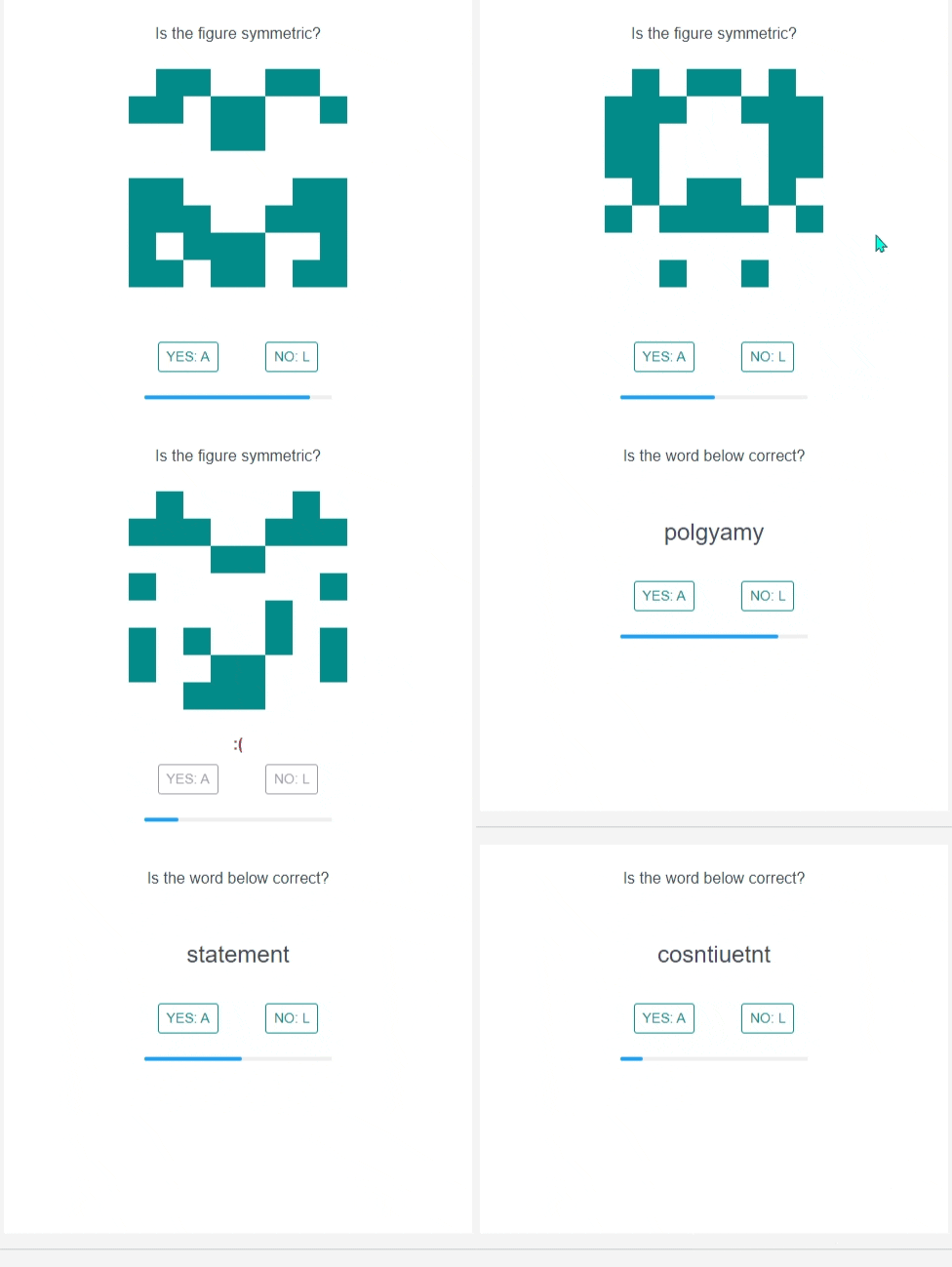
Incorporating cognitive games into Minecraft serves as an engaging initiative to enhance players’ cognitive control. The goal is to provide an enjoyable yet beneficial experience within the Minecraft environment. By integrating brain games like Dual N-Back, Corsi Block Tapping, Mental Math, and others, players can actively participate in activities designed to improve working memory, processing speed, and overall cognitive function.
The intention is to offer a unique and fun way for players to challenge themselves intellectually, fostering cognitive growth while enjoying the immersive world of Minecraft. The games are crafted with Java and Spigot, utilizing GUI interfaces similar to server gadgets, ensuring accessibility and a seamless integration into the Minecraft gaming experience.
Dual N-Back:
In Dual N-Back, players are required to remember the sequence of visual and auditory stimuli and identify when the current stimuli matches the one presented 'n' trials ago.
Study: The original study by Susanne M. Jaeggi and Martin Buschkuehl (2008) demonstrated that training with Dual N-Back can lead to improvements in fluid intelligence.

CWM (Complex Working Memory):
WM involves challenging working memory tasks that require the simultaneous processing and storage of complex information.
Study: Klingberg et al. (2005) conducted a study showing that computerized training of working memory, including complex working memory tasks, can lead to improvements in fluid intelligence.
Mental Math:
Mental math exercises involve performing calculations in your head without the use of external aids.
Study: While specific studies on mental math games may be limited, general cognitive training involving arithmetic tasks has been associated with improved mathematical and fluid intelligence skills (Dahlin et al., 2008).
Corsi Block Tapping:
Description: Corsi Block Tapping assesses visuospatial working memory by requiring participants to reproduce a sequence of block taps.
Study: Kessels, van den Berg, Ruis, and Brands (2008) found that Corsi Block Tapping performance was associated with individual differences in fluid intelligence.
Memory Span:
Memory span tasks involve recalling a sequence of items in the same order as presented.
Study: Engle et al. (1999) demonstrated that working memory capacity, including memory span, is related to fluid intelligence.
PASAT (Paced Auditory Serial Addition Test):
PASAT assesses information processing speed and working memory by requiring participants to add a series of numbers presented at a fixed rate.
Study: Stuss, Stethem, and Poirier (1987) found that performance on the PASAT is related to executive functions and working memory, which are components of fluid intelligence.